
A dental crown covers and protects a damaged or weakened tooth, but it does not make the natural tooth underneath immune to cavities. While the crown itself cannot develop tooth decay, the remaining tooth structure beneath and around it still can.
Decay under a crown can sometimes develop without obvious symptoms. By the time discomfort appears, the problem may have progressed far enough to require more extensive treatment.
At Keelesdale Dental, we provide same-day dental crowns and preventive dental care to help patients protect both their natural teeth and existing restorations. Knowing the warning signs of decay around a crown can help you seek treatment before a small problem becomes more serious.
How Can a Cavity Develop Under a Crown?
A crown is designed to fit securely over a prepared natural tooth. However, the edge of the crown meets your natural tooth near the gumline. This area, known as the crown margin, can still collect plaque and bacteria.
If plaque is not removed through brushing, flossing, and professional dental cleanings, bacteria can produce acids that attack the exposed natural tooth around the crown.
Over time, decay can begin at the crown margin and spread underneath the restoration.
Older crowns may be particularly important to monitor because changes in the cement, crown fit, gums, or underlying tooth can create areas where bacteria are more difficult to remove.
What Are the Signs of Decay Under a Crown?
Decay beneath a crown does not always produce immediate symptoms. In some cases, your dentist may identify the problem during a routine examination before you notice anything unusual.
When symptoms do occur, you might experience:
- New sensitivity to hot, cold, or sweet foods
- Pain when biting or chewing
- Persistent discomfort around the crowned tooth
- A loose crown or a change in how it feels
- An unusual taste or odour around the tooth
- Changes around the gumline
Any new symptom involving a crowned tooth is worth having checked, particularly if it does not improve.
Can You Have a Cavity Under a Crown Without Pain?
Yes.
Tooth decay can develop gradually and may not cause pain during its early stages. This is one reason regular preventive cleanings and exams remain important even when your teeth and crowns feel completely normal.
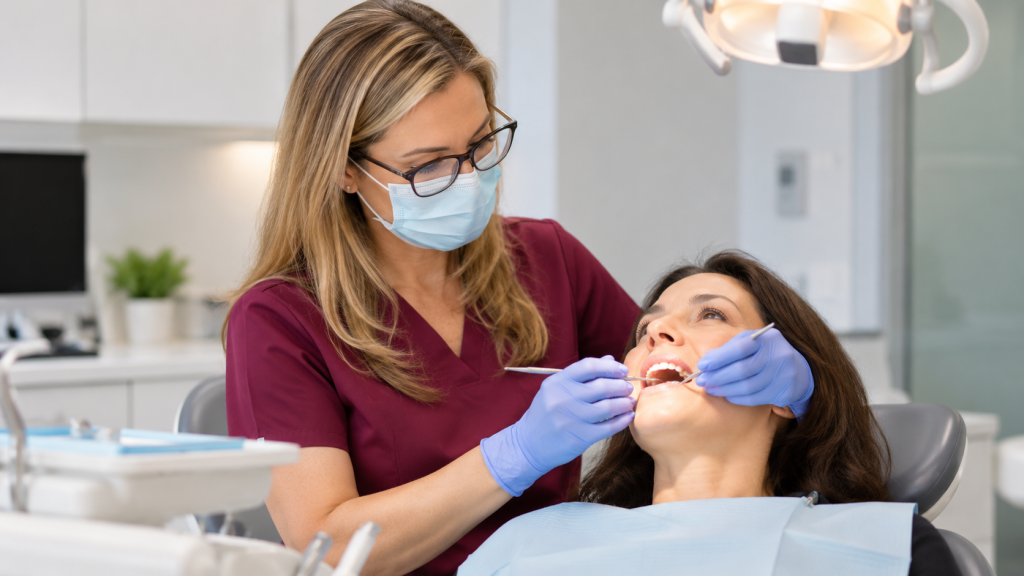
During an examination, your dentist can inspect the edges of existing crowns for changes, look for signs of decay, and assess whether the restoration still fits properly.
Detecting a problem early may provide more options for preserving the natural tooth.
How Does a Dentist Find Decay Under a Crown?
Some decay can be identified visually around the edge of the crown, but problems underneath a restoration are not always visible from the outside.
Your dentist may recommend digital X-rays to evaluate areas that cannot be seen during a standard examination. X-rays can sometimes reveal decay beneath or beside a crown and provide information about the tooth root and surrounding bone.
Your dentist may also examine the crown for movement, damaged margins, or changes in your bite.
The goal is to determine whether the crown remains secure and whether the natural tooth underneath is healthy.
What Happens If There Is a Cavity Under the Crown?
Treatment depends on how much decay is present and how much healthy tooth structure remains.
In many cases, the crown must be removed so the dentist can access the decay underneath. The damaged portion of the tooth is then cleaned away and the remaining tooth is evaluated.
If the decay is limited and there is enough healthy tooth remaining, the tooth may be restored and a new crown placed.
However, if decay has progressed deep into the tooth and affected the pulp, root canal therapy may be necessary before the tooth can be restored.
This is why early diagnosis matters. The longer decay remains untreated, the greater the risk that more natural tooth structure will be lost.
Can the Original Crown Be Put Back On?
Sometimes an existing crown can be reused, but this depends on its condition and whether it still fits the tooth correctly after treatment.
If decay has changed the shape of the underlying tooth or the crown itself is worn or damaged, a new restoration may be the better option.
Keelesdale Dental offers same-day dental crowns for appropriate cases, allowing many patients to have a custom restoration created and placed without the traditional process of wearing a temporary crown while waiting for a dental laboratory.
Your dentist will explain the available options after evaluating the tooth.
What Happens If You Ignore Decay Under a Crown?
Decay does not stop simply because the tooth is covered by a crown.
Without treatment, the cavity can continue spreading through the natural tooth. Eventually, it may reach the pulp, causing inflammation, infection, or significant pain.
The remaining tooth structure may also become too weak to support the crown.
In severe cases, a tooth that could once have been restored may eventually require extraction. Prompt treatment gives your dentist a better opportunity to preserve the natural tooth.
If you develop significant pain, swelling, or another sudden problem involving a crown, same-day emergency dentistry may be appropriate.
How Can You Prevent Cavities Around Dental Crowns?
A crowned tooth requires the same consistent oral hygiene as your natural teeth.
Brush twice daily with fluoride toothpaste and pay particular attention to the area where the crown meets the gumline. Floss every day to remove plaque and food particles between teeth and around restorations.
Regular dental visits are also important because your dental team can monitor crowns for early signs of wear, leakage, looseness, or decay.
Try to avoid frequently sipping sugary drinks or snacking on sugary foods throughout the day, since repeated sugar exposure gives cavity-causing bacteria more opportunities to produce acid.
If you grind or clench your teeth, a custom mouthguard may also help reduce excessive pressure on your crowns and natural teeth.
How Long Should a Dental Crown Last?
Dental crowns are durable restorations, but they are not expected to last forever.
Their lifespan varies depending on the material, location of the crown, oral hygiene, bite forces, grinding habits, diet, and the health of the underlying tooth.
Rather than focusing only on how old a crown is, pay attention to changes. A crown that suddenly feels loose, sensitive, uncomfortable, or different when you bite should be examined.
Routine dental appointments also allow your dentist to monitor older crowns even when they are not causing symptoms.
Concerned About a Dental Crown? Contact Keelesdale Dental
If you have sensitivity, discomfort, a loose crown, or concerns about an older restoration, don’t wait for the tooth to become painful. Keelesdale Dental can examine your crown, use digital X-rays when appropriate, and determine whether the tooth underneath remains healthy. If treatment is needed, we’ll explain your options for protecting and restoring the tooth. Call (416) 651-2422, request an appointment online at our Toronto dental clinic near Keele and Eglinton West.
Frequently Asked Questions
1. Can you get a cavity underneath a dental crown?
Yes. The crown itself cannot develop a cavity, but the natural tooth underneath and around the crown can still develop decay, particularly near the crown margin.
2. How do I know if my crown has decay underneath it?
Possible signs include sensitivity, pain when chewing, persistent discomfort, changes around the gumline, or a crown that feels loose. However, decay can sometimes develop without noticeable symptoms.
3. Can an X-ray show decay underneath a crown?
Digital dental X-rays can help dentists identify some areas of decay around or underneath a crown that may not be visible during a regular examination.
4. Does a cavity under a crown mean I need a root canal?
Not always. If the decay is identified before it reaches the dental pulp, the tooth may be restored without root canal treatment. Deeper decay that affects the pulp may require root canal therapy.
5. Can a tooth with decay under a crown still be saved?
Often, yes. Whether the tooth can be saved depends on how much decay is present and how much healthy tooth structure remains. Early diagnosis generally provides more restorative options.


