
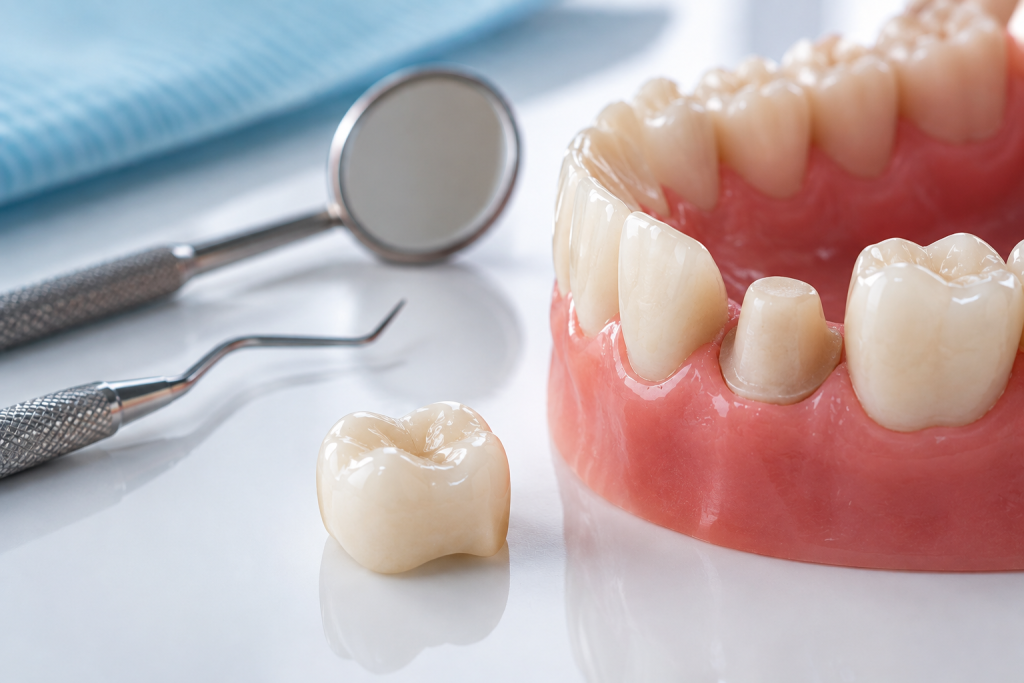
A dental crown is designed to protect a tooth that has been weakened by decay, a large filling, a fracture, or previous dental treatment. While crowns are made to be durable, they can occasionally become loose or fall off.
If this happens, it can be surprising, especially if the tooth suddenly feels sensitive or looks different. The important thing is not to panic and not to ignore it. A tooth without its crown is more vulnerable to sensitivity, damage, and decay.
At Keelesdale Dental, we provide same-day dental crowns and emergency dental care for patients experiencing problems with existing restorations. Here’s what you should do if your crown comes off and why seeing a dentist promptly is important.
Why Do Dental Crowns Fall Off?
A crown can become loose for several reasons. Sometimes the cement holding an older crown in place gradually weakens. In other cases, changes to the tooth underneath the crown can affect its fit.
Tooth decay can develop around the edge of a crown and weaken the remaining natural tooth. Grinding and clenching can also place significant pressure on crowns, particularly those covering back teeth.
Biting something unexpectedly hard may loosen or damage a restoration as well.
If your crown comes off, your dentist will need to determine why it happened before deciding whether the crown can simply be reattached.
What Should You Do If Your Crown Falls Out?
If possible, find the crown and keep it somewhere safe. Rinse it gently with water, but don’t aggressively scrub it or attempt to alter its shape.
Next, contact your dentist and explain what happened.
A lost crown may not always cause severe pain, but the exposed tooth should still be examined promptly. Keelesdale Dental provides same-day emergency dentistry for urgent dental concerns, subject to appointment availability.
Until you can get to the dentist, keep the area clean and avoid chewing on that side of your mouth.
Don’t Try to Glue the Crown Back Yourself
One thing you should not do is use household glue or another permanent adhesive to put the crown back on.
These products are not designed for use inside the mouth and can make professional treatment more difficult.
Temporary dental cement sold specifically for dental use may sometimes be appropriate as a short-term measure, but it is still important to speak with your dental office for guidance. A crown that appears to fit may not be positioned correctly, and forcing it into place could damage the tooth or restoration.
Why Does the Tooth Feel Sensitive?
Once a crown falls off, the underlying tooth may become sensitive to cold, heat, pressure, or sweet foods.
This happens because the crown was protecting the prepared tooth underneath. Without that protective covering, sensitive areas may suddenly be exposed.
Try to avoid extremely hot or cold foods until your appointment. Chew on the opposite side and continue gently brushing around the affected tooth to prevent plaque from accumulating.
If sensitivity becomes severe or develops into persistent tooth pain, tell your dentist when you call.
Can the Same Crown Be Put Back On?
Sometimes.
If the crown itself is still in good condition and the tooth underneath remains healthy, your dentist may be able to clean the crown and re-cement it.
However, a crown cannot always be reused.
If decay has developed underneath it, the tooth may first need treatment. If the crown is cracked, worn, or no longer fits properly, a replacement may be recommended.
Your dentist may use digital X-rays to examine the underlying tooth and determine whether there are problems that cannot be seen during a visual examination.
What If the Tooth Under the Crown Is Damaged?
A lost crown sometimes reveals a larger dental problem.
If part of the natural tooth has fractured, there may not be enough structure remaining to simply replace the crown. Your dentist will assess how much healthy tooth remains and whether the tooth can be restored.
If the nerve inside the tooth has become infected or significantly damaged, root canal therapy may be necessary before a new restoration is placed.
The sooner the tooth is examined, the better the opportunity to address the problem before additional damage occurs.
How Quickly Should You See a Dentist?
You should contact your dentist as soon as reasonably possible after losing a crown.
Even when there is no pain, delaying treatment leaves the prepared tooth exposed. The tooth could develop decay, fracture, or shift slightly, potentially making it more difficult for the original crown to fit.
A lost crown becomes more urgent if you have significant pain, swelling, bleeding, signs of infection, or a fractured tooth.
When you call Keelesdale Dental, let us know that you’ve lost a crown and describe any symptoms you’re experiencing so our team can help determine how quickly you should be seen.
Can You Prevent a Crown From Falling Out?
You cannot prevent every problem, but good dental habits can help crowns last longer.
Brush twice a day, floss around your crowns carefully, and attend regular preventive cleanings and exams. These visits allow your dentist to look for decay around crown margins and identify restorations that may be showing signs of wear.
Avoid chewing ice, hard candies, pens, and other objects that can place unnecessary pressure on your teeth.
If you grind or clench your teeth, ask whether a custom mouthguard could help protect your natural teeth and dental restorations.
Don’t Ignore a Loose Crown
You don’t necessarily have to wait for a crown to completely fall off before seeing your dentist.
If your crown begins to move, feels different when you bite, develops a gap around the edge, or causes new sensitivity, schedule an examination.
Addressing a loose crown early may make it possible to protect the tooth before the restoration becomes completely dislodged or additional damage occurs.
Lost a Dental Crown? Contact Keelesdale Dental
If your dental crown has fallen out or feels loose, contact Keelesdale Dental rather than waiting for the problem to become more serious. Our team can examine the underlying tooth, determine whether your existing crown can be reattached, and discuss same-day dental crowns or other treatment options when a replacement is needed. Call (416) 651-2422, request an appointment online to book an appointment at our Toronto dental clinic near Keele and Eglinton West.
Frequently Asked Questions
1. Is a lost dental crown an emergency?
A lost crown should be evaluated promptly, although it is not always a severe emergency. If you have significant pain, swelling, bleeding, or signs of infection, contact your dentist immediately and explain your symptoms.
2. Can I eat if my dental crown has fallen off?
Yes, but try to chew on the opposite side of your mouth. Avoid hard, sticky, very hot, or very cold foods that could damage or irritate the exposed tooth.
3. Can I put my dental crown back on myself?
Do not use household glue or permanent adhesives. Keep the crown safe and contact your dentist. Your dentist needs to examine both the crown and the underlying tooth before determining whether it can be safely reattached.
4. Why did my crown fall off after several years?
Dental cement can weaken over time, but decay, grinding, changes in the underlying tooth, or damage to the crown can also cause it to become loose. A dental examination can identify the cause.
5. Will I need a completely new crown?
Not necessarily. If the existing crown is undamaged and the underlying tooth remains healthy, it may be possible to re-cement it. If the crown no longer fits properly or the tooth has changed, your dentist may recommend a new restoration.


